
IT Governance

What is IT Governance?
IT governance is a structured framework aligning IT investments with business goals and managing associated risks effectively.
Contents
Why is it important?
- Improved Decision-Making
Effective IT governance enhances decision-making processes within IT an business operations for better outcomes. - ResourceOptimisation
Optimising IT resources through governance ensures efficient use of technology and budget within organisations. - Transparency and Accountability
IT governance increases transparency and accountability, promoting trust and clear responsibility in IT operations.
Organisations can leverage off a number of frameworks as they navigate their IT governance adoption.
| Framework | Focus Area | Best For |
|---|---|---|
|
COBIT
|
IT governance & management
|
Holistic IT control and alignment
|
|
ITIL
|
IT service management
|
Operational IT and service delivery
|
|
ISO 38500
|
High-level IT governance
|
Board-level oversight
|
|
ISO 27001
|
Information security
|
Data protection, risk, compliance
|
|
COSO
|
Risk and control frameworks
|
Broader risk and compliance
|
IT Governance Pillars:
From insights to board packs
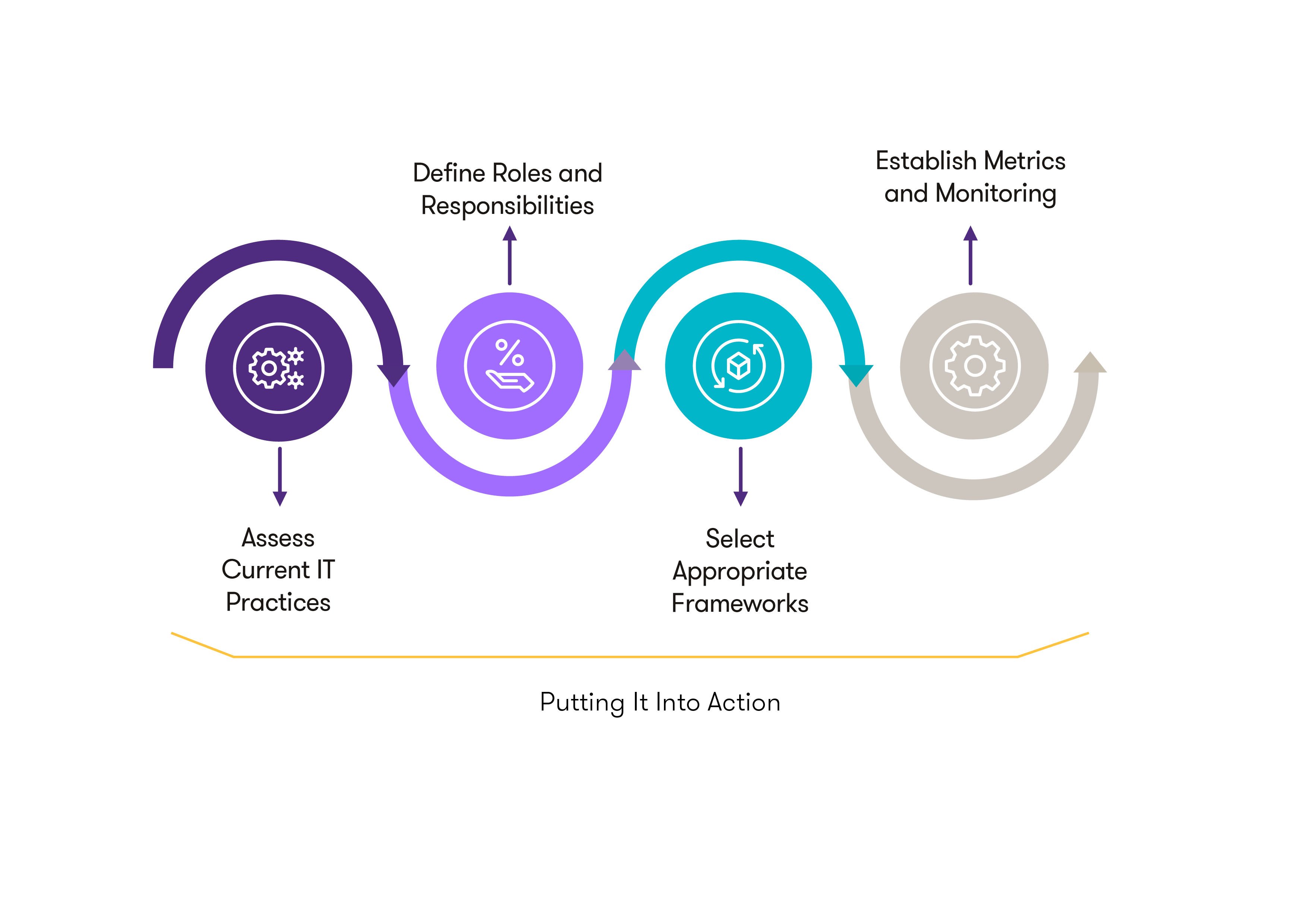
Lessons learnt in implementation:
- IT governance Frameworks should be practical and fit for purpose in relation to the Organisation’s size and complex
- IT governance should to be supported at a Board and Exco level for effective adoption across the business
- Feedback mechanisms should be established across various Governance structures with ultimate reporting at a Board level
- Focused reporting based on stakeholder needs
- Clear roles and accountability should be established from the onset
- Measure and monitor performance to track progress
- IT Governance is a continuous journey which requires ongoing effort and adaptation
Authors